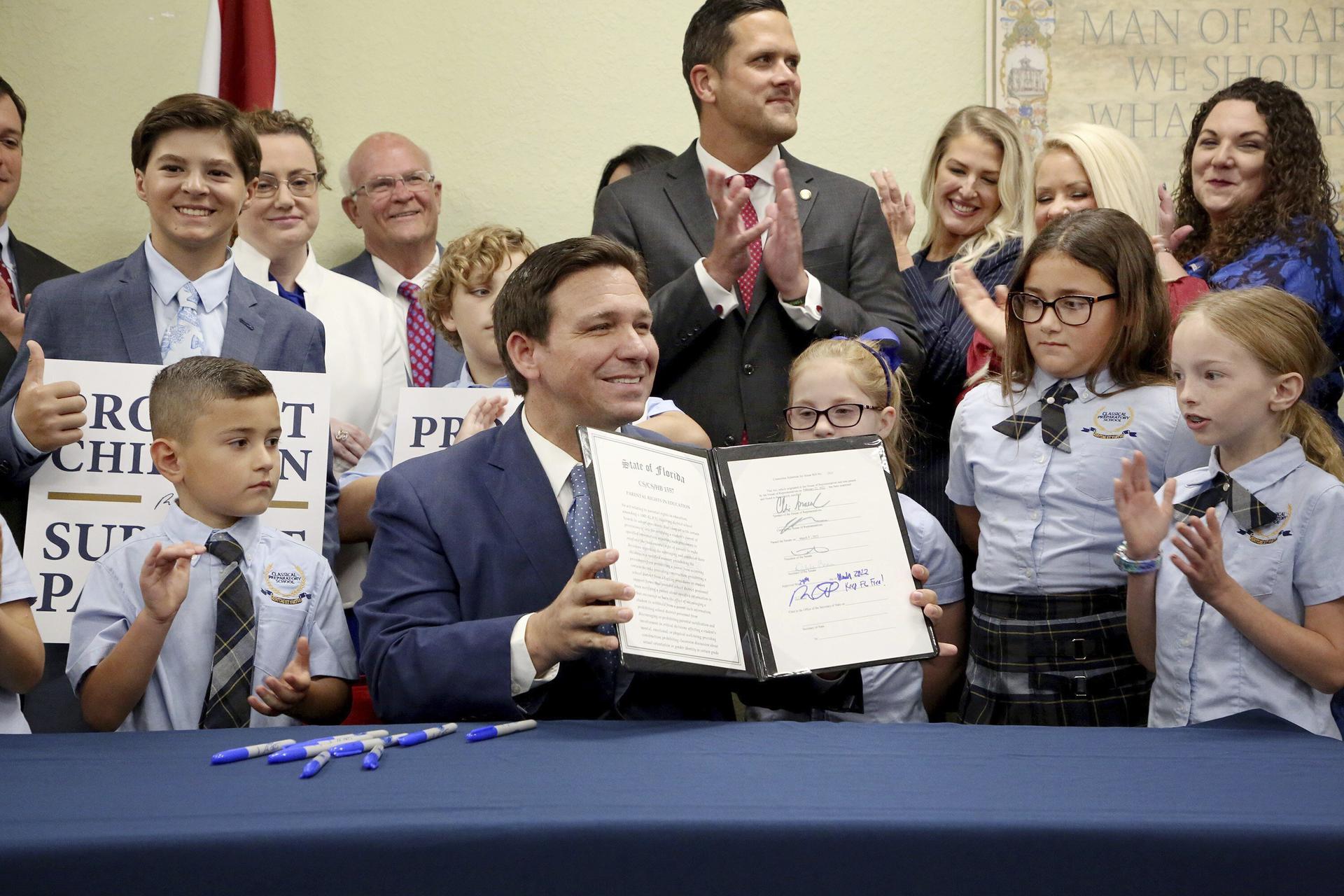
If you care about LGBTQ rights, then it's hard not to be angry or depressed about what happened on Monday, when Florida Republican Gov. Ron DeSantis signed what he and his allies call a "parental rights bill" and its many critics are calling the "Don't Say Gay" bill.
But if you look closely enough at what happened and why, you may discover one reason for optimism.
The law, as you're probably heard by now, establishes new rules for Florida public schools. The purpose ― in the statute's own words ― is "prohibiting classroom discussion about sexual orientation or gender identity in certain grade levels or in a specified manner." That includes a prohibition on any instruction on orientation or identity, "in kindergarten through grade 3 or in a manner that is not age-appropriate or developmentally appropriate."
The law also requires schools to inform parents of changes to student "mental, emotional, or physical health or well-being." If parents believe schools or school employees have violated any of the law's terms, and if the district doesn't address those concerns, parents can sue the schools.
DeSantis and his supporters in politics and conservative media bristle at the suggestion they are attacking the LGBTQ community — and keep reminding everybody that the statute doesn't include the word "gay."
But it's difficult to take all of their protestations seriously when officials like DeSantis spokesperson Christina Pushaw describe the law as an "anti-grooming" measure, or when the law's sponsor, state senator Dennis Baxley, says publicly he is bewildered at the rise in children who say they identify as LGBTQ. ("There's something wrong with how we're emphasizing this," he said during the floor debate.)
And the bill's ambiguity appears to be deliberate. With no definition of terms like "discussion" or "instruction" or "age-appropriate," teachers are bound to worry about lawsuits for something as simple as explaining in the classroom why some kids have two dads.
The biggest fear is what the law could mean for LGBTQ youth, so many of whom already feel stigmatized, bullied or worse — and who may now be afraid to get help from counselors or teachers. As HuffPost's Brittany Wong noted recently, "having at least one adult with whom to share your identity is the No. 1 protective factor against suicide for LGBTQ youth."
The law's enactment is part of a ferocious pushback on LGBTQ rights that's taking place all over the country. But while the conservatives like DeSantis behind this campaign are winning battles today, they may still lose the war.